


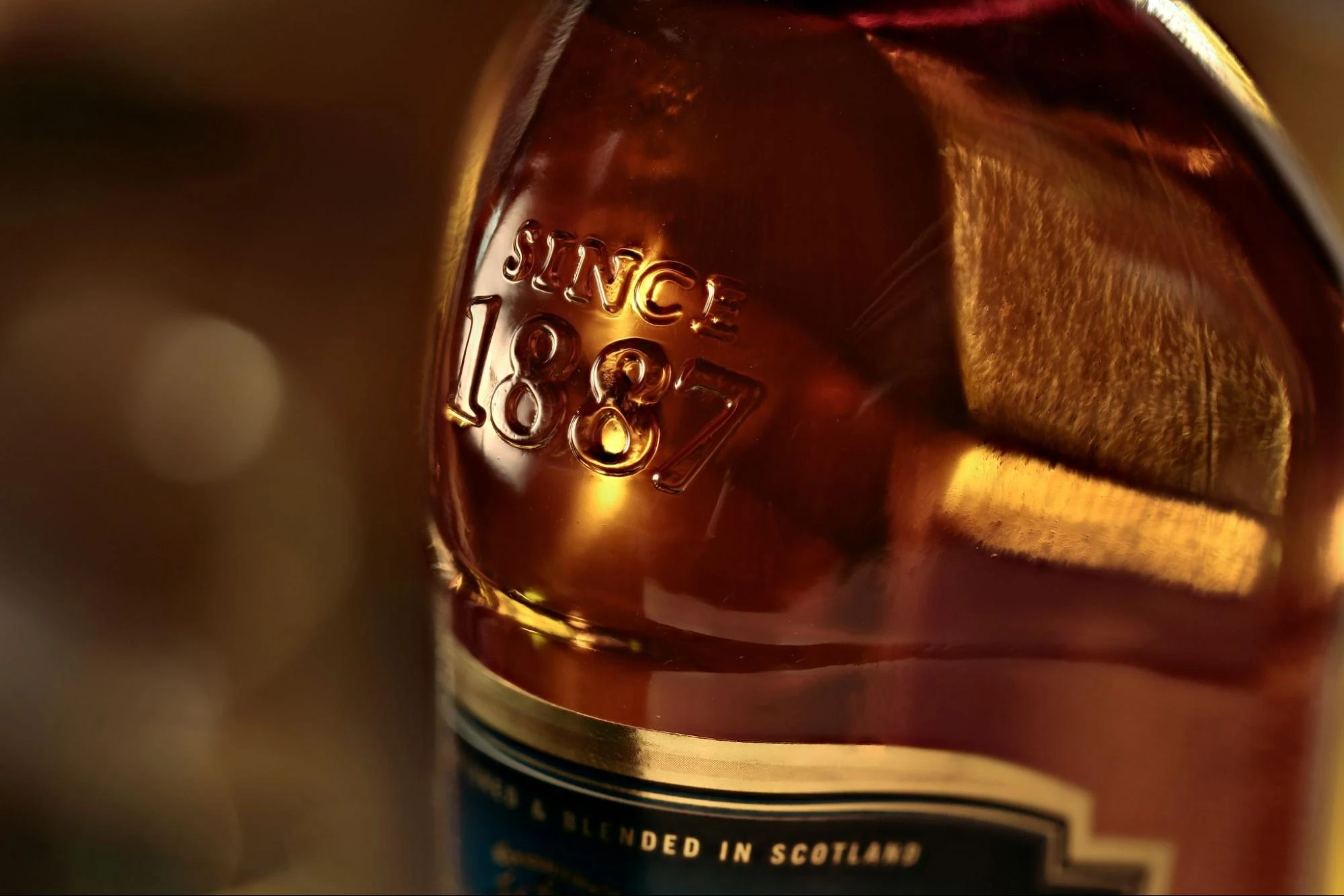
A whisky age statement is the number printed on a bottle that tells you the minimum amount of time that spirit has spent maturing in oak casks. In Scotch whisky, it always refers to the youngest whisky present. It is a legal declaration, not a marketing claim, and it is regulated by the Scotch Whisky Association.
The number on a whisky label can tell you a great deal. But it cannot tell you everything. Whisky age statements are one of the most misread pieces of information in the category, often treated as a straightforward quality ranking when they are, in fact, something more specific and more interesting than that.
Understanding what age statements actually mean, and what they do not, gives you a much clearer picture of what you are buying, drinking, or owning.
In Scotland, all Scotch whisky must spend a minimum of three years in oak before it can legally carry the name. An age statement goes beyond that floor. It guarantees that every drop in the bottle has spent at least that many years in wood, whether the product is a single malt, a blended malt, or a blended Scotch.
During maturation, the spirit is in a constant state of change. The oak cask breathes with the seasons, drawing the whisky in and out of the wood. Compounds from the barrel, including vanillin, tannins and lactones, work their way into the spirit, altering its colour, aroma and texture. If the cask previously held sherry, bourbon, port or wine, those residual flavours contribute too.
The older a whisky gets, the more the cask tends to dominate its character. Some spirits thrive under that influence. Others are better caught earlier, before the wood overwhelms the distillery character that made them interesting in the first place.
Not automatically. Age is a measure of time in wood, not a measure of quality. A whisky that has spent 18 years in a depleted, low-quality cask will not outperform one that has spent 12 years in exceptional first-fill sherry wood. What matters is the combination of spirit quality, cask type, warehouse conditions and the skill with which the maturation has been managed.
Age statements are best understood as context. They tell you where a whisky is in its development, not whether that development has been a success.
Across Scotch whisky, certain age thresholds have become recognised benchmarks. Here is what each one typically signals.
At eight years, the spirit still speaks loudly. Raw grain, citrus sharpness and, in peated expressions, assertive smokiness are all common. The wood influence is present but has not yet taken over, which means the distillery character is unusually transparent. Fewer distilleries release at this age than they once did, making genuine eight-year-old single malts increasingly uncommon.
Ten years marks a genuine turning point. Tannins integrate, the body rounds out, and the spirit and the wood begin working together. Orchard fruit, vanilla and gentle spice become more prominent. Many respected distilleries anchor their core range here, and for good reason: it is an age at which a well-made whisky finds real equilibrium.
Twelve years is widely regarded as the point at which a Scotch single malt comes into its own. Dried fruit, integrated spice, vanilla and a smooth finish are hallmarks. This is the age at which single malts begin to attract serious collectors alongside casual drinkers, and it remains the most recognised milestone in the category.
By 15 years, the individual cask has become as important as the distillery itself. Darker fruit, leather, toasted oak and waxy or floral notes are common, and the whisky has a depth that rewards careful attention. Fewer casks reach this milestone, partly because of the angel’s share reducing volume over time, and partly because of the cost and patience required to hold stock this long.
Eighteen years is serious whisky. The alcohol has softened, the tannins have fully resolved, and what remains is rich, composed and unhurried. Old sherry wood, warm spice, tobacco and leather are common markers. These expressions are released in limited quantities and carry genuine prestige, though the caveat remains: not every spirit benefits from this much time in wood.
For those who own a cask rather than simply purchase a bottle, age statements take on additional significance. Each milestone represents a decision point: continue maturing, re-rack into a different cask type for finishing, or bring the whisky to market. Understanding what is happening to the spirit at each stage of its development is central to making those decisions well.
At Tomoka Fine & Rare, we work with private clients to navigate exactly that process, from selecting the right cask at the outset to advising on the optimal point to exit. The age statement is where the conversation begins.
Whisky casks are long-term, illiquid assets. Values can fluctuate and returns are not guaranteed. For private clients only.
To find out more about cask ownership, visit tfandr.com/invest or speak with one of our advisors.
A whisky age statement tells you the minimum number of years the spirit has spent maturing in oak casks before bottling. In Scotch whisky, it always refers to the youngest component present. It is a legal guarantee regulated by the Scotch Whisky Association, not a marketing claim.
Not necessarily. Age reflects time in wood, not quality. A well-made 10-year-old from a strong distillery can outperform a poorly matured 18-year-old. The quality of the cask, the underlying spirit and the warehouse conditions all play equally important roles in the final result.
Scotch whisky must be matured in oak casks in Scotland for a minimum of three years before it can legally be called Scotch. This applies to all five categories of Scotch: single malt, single grain, blended malt, blended grain, and blended Scotch whisky.
No-age-statement (NAS) whiskies do not carry an age declaration, often because they include younger spirit that the producer does not wish to disclose, or because the expression is designed around a flavour profile rather than a maturation milestone. NAS whiskies can be excellent, though they require more context to evaluate than age-stated expressions.
The angel’s share is the volume of whisky that evaporates from the cask during maturation. In Scotland, this typically amounts to around 2% of the cask’s contents per year. Over time, this means that older casks contain considerably less liquid than when they were filled, which is one reason why aged expressions are rarer and command greater attention.
For both single malts and blended Scotch, the age statement always refers to the youngest whisky present. A single malt age statement reflects the specific cask or casks from a single distillery. In a blend, there may be whiskies considerably older than the stated age, but none younger.
There is no single answer. Each distillery style and each individual cask has its own peak. Some spirits are at their most expressive and balanced at 10 or 12 years. Others continue to develop and improve well beyond 18. The key variables are spirit quality, cask condition, and warehouse environment, not the age alone.
For cask owners, age milestones are natural decision points: moments to assess the spirit’s development, consider whether to continue maturing, re-rack into different wood, or bring the whisky to market. Each milestone carries different implications for character, rarity and how the whisky is likely to be received.


This website uses cookies to ensure you get the best experience on our website. Read more
We won't track your information when you visit our site. But in order to comply with your preferences, we'll have to use just one tiny cookie so that you're not asked to make this choice again.
Access our whiskey guide for the latest on cask whiskey ownership.

