


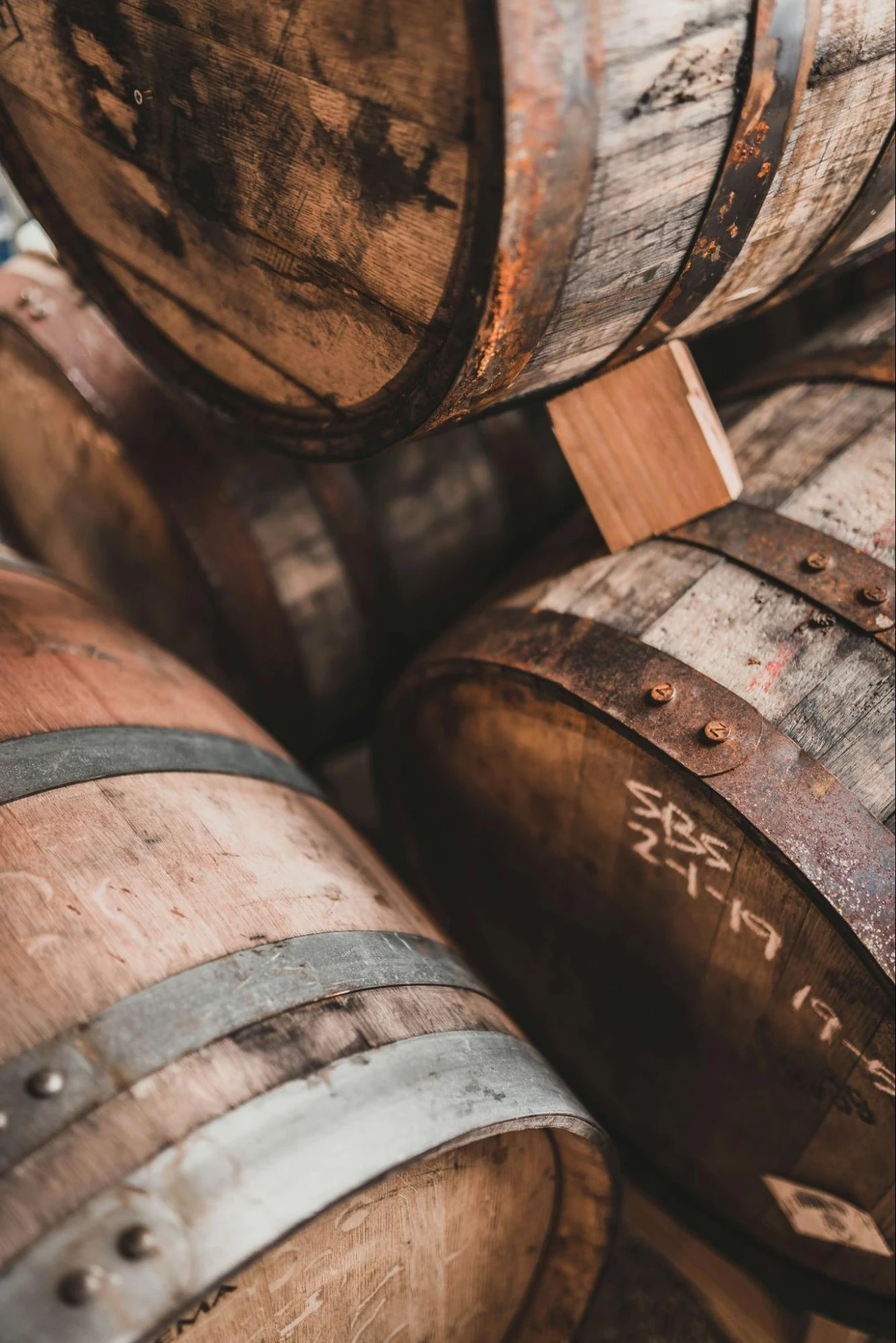
Most alternative assets sit in a spreadsheet. A whisky cask sits in a bonded warehouse, quietly maturing, drawing character from the oak around it, building something that simply did not exist when you first acquired it.
That distinction matters. Whisky cask ownership has moved well beyond niche interest over the past two decades, attracting private clients who want tangible, long-form ownership of a physical asset with genuine craft behind it. This guide sets out what a whisky cask is as an asset, how it came to occupy the space it does today, and what any prospective owner should understand before committing.
Is a whisky cask an alternative asset?
A whisky cask is a physical, illiquid asset that sits outside conventional financial markets. It does not trade on an exchange, is not subject to the same regulatory framework as equities or funds, and derives its value from a combination of the spirit inside it, the time it has spent maturing, the reputation of the distillery, and prevailing demand at the point of exit. Those characteristics place it firmly in the alternative asset category, alongside fine art, classic cars, and rare wines. What distinguishes it from many alternatives is the active maturation process: the asset is genuinely changing in character and, in many cases, in value, throughout the ownership period. Whether that trajectory suits a given owner depends on a range of factors explored throughout this guide.
The traditional framework of equities, bonds, and property has long served as the default for private wealth. But extended periods of low interest rates, market volatility, and a broader shift in how private clients think about portfolio construction have created genuine appetite for assets that behave differently.
Alternative assets, broadly defined, are those that fall outside the listed financial markets. They include private equity, hedge funds, commodities, collectibles, and tangible assets such as fine wine and whisky. What they share is a degree of insulation from the short-term noise of public markets. They tend to be illiquid, require a longer holding horizon, and reward those who understand the underlying asset rather than simply tracking a price.
Whisky cask ownership aligns naturally with that profile. It is a long-term proposition by nature. The spirit needs time in the wood. That enforced patience is not a limitation; for many private owners, it is precisely the point.
For most of the twentieth century, cask ownership was the preserve of the industry. Distilleries held their own stock, blending houses bought in bulk, and the idea of a private individual owning a maturing cask was largely unknown outside Scotland. Access was restricted not by regulation but by convention and information. The market simply did not exist for those outside the trade.
That began to change gradually through the 1990s and early 2000s, as a small number of brokers and specialist firms started making individual casks available to private buyers. These were early transactions by today’s standards, with limited transparency around pricing and provenance, but they established a precedent that private ownership was possible and legal.
The period from 2010 onwards saw meaningful acceleration. Global demand for aged Scotch whisky, particularly from Asian markets, put sustained pressure on maturing stock. Distilleries that had been operating at modest capacity found themselves unable to meet demand for older expressions, and the scarcity of well-aged casks began to register in pricing. Private owners who had held casks through this period found themselves sitting on stock with real commercial appeal.
Simultaneously, a generation of whisky enthusiasts who had built serious bottle collections began asking the obvious next question: could they own the source rather than the product? The answer, for those who knew where to look, was yes. And an increasing number of specialist firms emerged to make that process accessible.
Today, whisky cask ownership is a recognised, if still relatively niche, segment of the alternative asset market. Private clients across the UK, Europe, Asia, and North America hold casks in bonded warehouses, advised by specialist firms with in-house whisky expertise. The market has matured considerably in terms of transparency, due diligence, and the quality of guidance available to new owners. It remains, however, an unregulated space in the UK, which places the burden of research and professional advice firmly on the buyer.
Several characteristics set whisky cask ownership apart from comparable alternative assets.
The quality of the advisory relationship is the single most important factor for anyone entering the cask market for the first time. The specialist firm you work with should hold the relevant HMRC licences, maintain their own bonded warehouse or have established relationships with reputable third-party facilities, and be able to demonstrate genuine whisky expertise rather than simply a sales process.
Beyond that, the cask itself matters. Distillery reputation, cask type, fill date, and spirit character all contribute to how the asset performs over time. A first-fill ex-bourbon barrel from a well-regarded Speyside distillery carries a different profile to a refill sherry butt from a lesser-known producer. Understanding those distinctions, and how they translate to exit value, is where specialist knowledge becomes essential.
Transparency around pricing, storage terms, and exit options should be present from the first conversation. Any firm that is reluctant to provide clear documentation or that leads with promises of specific returns should be approached with caution.
A whisky cask is a physical asset that matures in a bonded warehouse over a period of years. It sits outside conventional financial markets and derives its value from the quality of the spirit, the distillery’s reputation, the age of the whisky, and market demand at the point of exit. These qualities place it in the alternative asset category alongside fine wine, rare art, and other tangible collectibles.
Most cask owners hold for a minimum of five years, with many choosing to hold for ten years or longer to reach the age milestones that carry most market weight. Scotch whisky must mature for a minimum of three years by law before it can be sold as such. The sweet spots in terms of value and marketability tend to sit at ten, twelve, fifteen, and eighteen years.
The primary ongoing cost is warehouse storage, typically charged annually. Owners may also pay for insurance, periodic regauging to measure volume and ABV, and management fees depending on the arrangement with their advisory firm. These costs should be clearly set out before purchase and factored into any long-term assessment of the ownership proposition.
Private individuals can own whisky casks, and that access has expanded significantly over the past two decades. What was once a closed, trade-only market is now accessible to private clients through specialist advisory firms. The key is working with an established firm that holds the appropriate HMRC licences and can guide a new owner through the acquisition and management process.
At exit, a cask owner broadly has two options: sell the cask to another buyer, such as an independent bottler or a private collector, or arrange for the whisky to be bottled under their own label. Each route has different cost and complexity implications. The right choice depends on the quality of the whisky, the state of the market, and what the owner wants from the experience.
A reputable firm will hold HMRC licences including WOWGR, operate with full transparency on pricing and storage terms, be able to provide independent valuation and regauging reports, and have demonstrable whisky expertise in-house. Be cautious of any firm that leads with guaranteed returns, is reluctant to provide documentation, or cannot clearly explain their exit process.
Tomoka Fine & Rare advises private clients on whisky cask ownership from initial acquisition through to exit. Based at The Royal Exchange in London and in St Albans, our team brings together deep whisky knowledge and a straightforward, transparent approach to every client relationship.
To start a conversation, visit tfandr.com/contact.
*Whisky casks are a long-term, illiquid asset. Values can fluctuate and returns are not guaranteed. For private clients only.



This website uses cookies to ensure you get the best experience on our website. Read more
We won't track your information when you visit our site. But in order to comply with your preferences, we'll have to use just one tiny cookie so that you're not asked to make this choice again.
Access our whiskey guide for the latest on cask whiskey ownership.

