


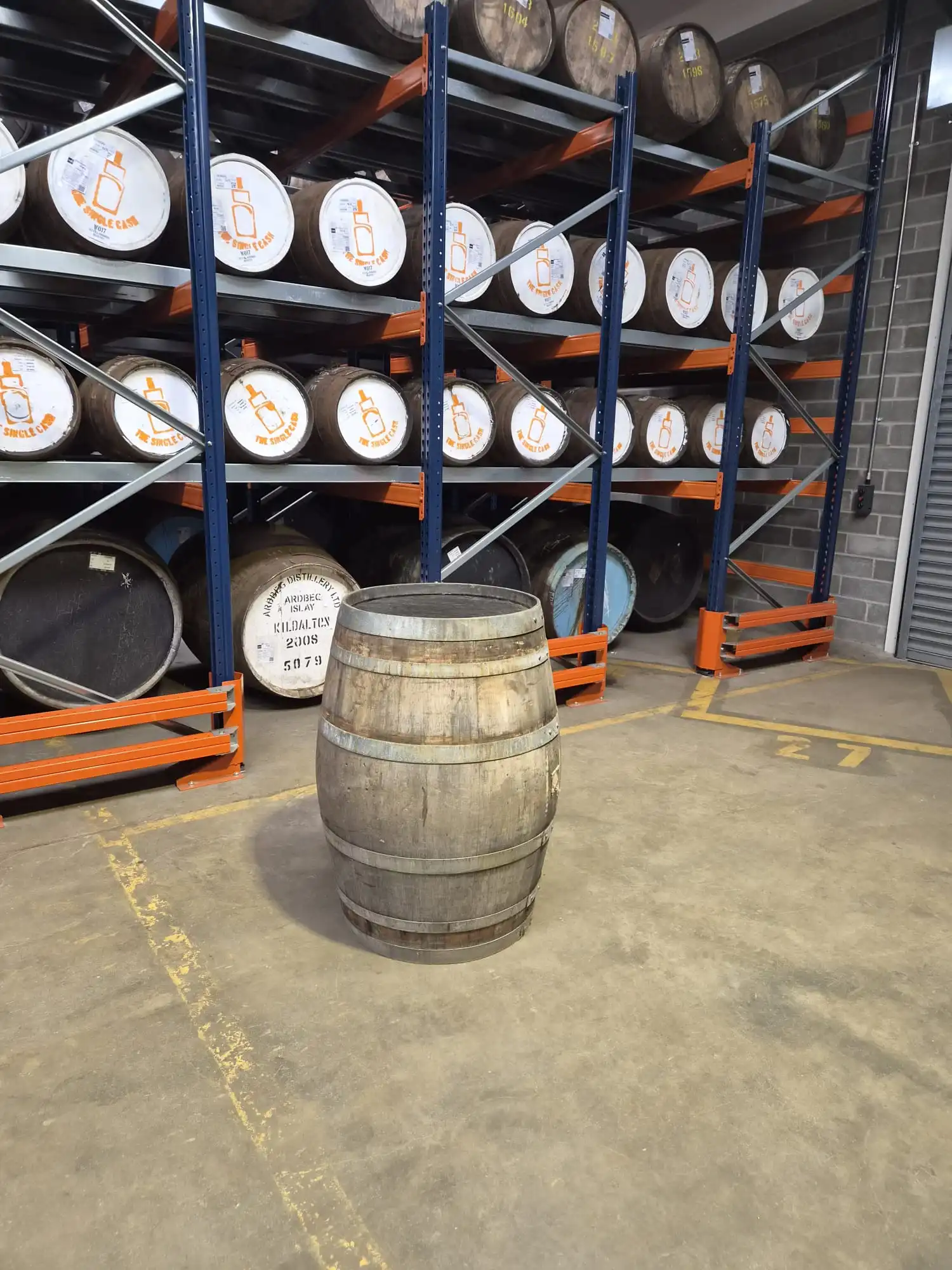
A cask sitting in a bonded warehouse is easy to describe on paper and much harder to confirm in practice. Knowing which documents prove it exists, and that it will genuinely be yours, is what separates a confident purchase from an expensive assumption.
Authenticating a whisky cask means verifying that it exists, matches how it has been described, can be legally transferred into your name and is stored where the seller says it is. It takes several checks working together rather than one document, and knowing which ones matter most is where the real protection lies.
Definition: cask authentication is the process of confirming a cask’s identity, history, ownership and storage using independent documentation rather than the seller’s description alone.
Buying a cask is nothing like buying a bottle. The whisky will usually stay in bond for years, so you’re relying on paperwork rather than anything you can hold. That’s why it pays to confirm the cask for yourself before you commit, and why a good provider will expect you to ask.
Before you commit, you should be able to answer these questions:
Work through these steps in order, and treat any gap as a reason to ask more questions.
You’ll often hear the term Delivery Order used for the paperwork that tells a bonded warehouse a cask has changed hands. It’s a trade term rather than a legal one, and it doesn’t appear in HMRC’s guidance on selling goods held in a warehouse.
What matters is that the warehouse knows about the change. Under the Excise Warehousing (Etc.) Regulations 1988, the warehousekeeper must keep a record of the name and address of the owner of the goods it holds, along with any changes of ownership. HMRC’s Excise Notice 197 also sets out how the buyer and seller should let the warehousekeeper know about a transfer, and expects a written commercial agreement to be in place between the warehouse and the owner.
So rather than relying on a single document, ask how the warehouse will be notified and whether its records will show you as the owner. It’s also worth asking whether you’ll have your own storage agreement with the warehouse, and whether you’ll be able to visit the cask once you own it. If a seller can’t answer clearly, pause before going any further.
Most casks mature in bonded warehouses, where duty and VAT are typically deferred until the whisky leaves bond. Rather than relying on the seller’s word, ask about the warehouse itself:
| Check | What to look for |
| Distillery | The producer named, with supporting documentation |
| Dates | Distillation and fill dates |
| Cask reference | A unique identifier for the individual cask, which may be confirmed in the purchase agreement |
| Cask type | The wood and what it previously held |
| Volume and strength | Original fill volume and strength, or the figures from the most recent regauge |
| Ownership | Warehouse records showing you as the owner |
| Storage | An approved bonded warehouse you can confirm |
| Insurance | Whether the warehouse insures the cask, or you need your own policy |
| Costs | Ongoing storage, insurance and management charges |
| Exit | How you could eventually sell or bottle it |
Be wary of descriptions that rely on words rather than records, a seller who can’t explain how ownership transfers, or any reluctance to let you see your cask or confirm its location. Pressure to decide quickly is another reason to slow down, since a genuine cask will still be there once you’ve done your checks.
The most reliable check is to contact the warehouse directly and confirm the cask exists and is held there. A reputable provider should be happy for you to do this. Some details, such as the cask number, may not be shared until the purchase agreement, so ask what you’ll receive and at what stage. If you’ve chosen a specific cask, you may need to secure it first so it isn’t sold to someone else while you complete your checks.
The warehouse’s own records are the clearest evidence. The warehousekeeper is required to record who owns the goods it holds, so ask whether those records will show you as the owner once the transfer is complete.
No, the cask whisky market is not regulated in the UK. That makes independent due diligence on both the cask and the company especially important.
It’s worth asking before you buy whether you’ll be able to visit your cask once you take ownership. A seller who is open about where it is held is a good sign.
Provenance is the history of a cask: the distillery that produced it, when it was filled and how it has been casked and stored since. A transparent provider will confirm these details from the start.
Ask about storage, insurance and any management fees, as these continue for as long as you own the cask. A transparent provider will set them out clearly from the start.
To talk through the checks with our team, visit tfandr.com/contact.
Whisky casks are a long-term, illiquid asset. Values can fluctuate and returns are not guaranteed. For private clients only.
HM Revenue & Customs, Receive goods into and remove goods from an excise warehouse (Excise Notice 197), section 9.1: https://www.gov.uk/guidance/receive-goods-into-and-remove-goods-from-an-excise-warehouse-excise-notice-197
The Excise Warehousing (Etc.) Regulations 1988 (SI 1988/809), regulation 21 and Schedule 2: https://www.legislation.gov.uk/uksi/1988/809/contents/made

This website uses cookies to ensure you get the best experience on our website. Read more
We won't track your information when you visit our site. But in order to comply with your preferences, we'll have to use just one tiny cookie so that you're not asked to make this choice again.
Access our whiskey guide for the latest on cask whiskey ownership.

