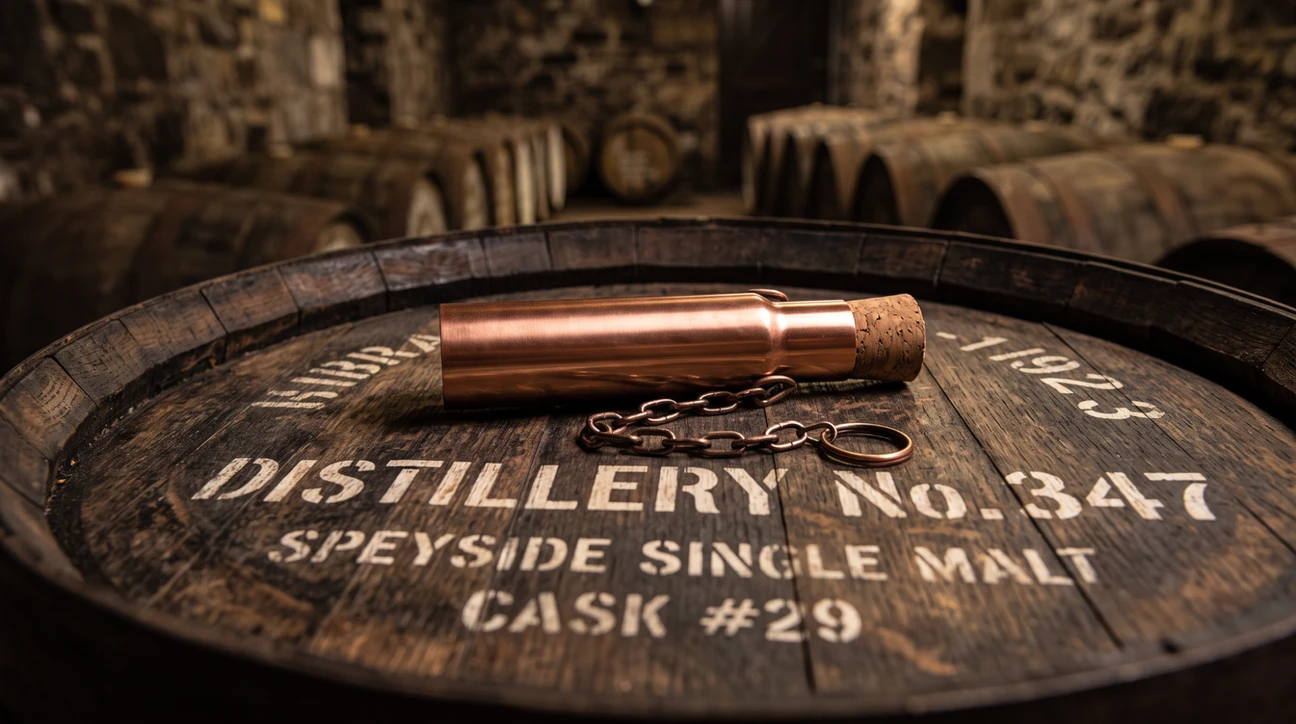
Long before sampling a cask became a tidy, paperwork-heavy affair, warehouse workers had a quieter method of their own. It was a slim copper tube that slipped through a bunghole and, if the stories are to be believed, down the inside of a trouser leg.
A copper dog is a slender copper tube, traditionally attached to a chain or cord, used to draw whisky from a cask through its bunghole. It’s a simple piece of kit with a colourful reputation, and the stories attached to it say a great deal about how whisky once sat at the heart of the communities that made it.
Definition: a long, narrow copper vessel, lowered into a cask through the bunghole to collect a small sample of the whisky inside.
The tube is lowered into the cask, fills with whisky, and is drawn back up on its chain or rope. Sizes vary considerably, from pocket-sized versions to those well over a foot long, which were easier to use but harder to hide.
The most commonly repeated explanation is that the tool never left its owner’s side, much like a loyal pet. Whether or not that’s the true origin, the name stuck, and it suits the object well. It was personal, portable and often kept out of sight.
Historically, many people working around distilleries and warehouses would have had access to one, and a quiet sample on a night patrol became part of the culture. It carried real risk, though. Taking whisky without permission was serious misconduct and could cost a worker their job. That’s where the tales of ingenuity come from, with tubes filled in a flash and the evidence carried away out of sight. It’s best to treat the more colourful stories as folklore rather than fact.
In small distilling communities, whisky wasn’t simply a product shipped elsewhere. It was woven into daily life, and informal sharing of the spirit was part of that fabric. A copper dog is a reminder that the story of whisky is as much about people and place as it is about process and ageing.
A valinch is the traditional tool used by authorised staff to draw samples in a controlled, accountable way. A copper dog belongs to the unofficial side of whisky history. Both do a similar job, but only one comes with a wink and a story.
Whisky drawn straight from the cask is undiluted and unfiltered, so it’s tasted at cask strength, exactly as that cask has made it. Anyone sampling this way would have been tasting whisky in its purest form, which is a big part of why cask strength whisky still has such a loyal following.
Today, copper dogs are more often seen as collectors’ pieces, gifts and talking points than everyday working tools. They remain popular with whisky enthusiasts who enjoy the heritage they represent.
Sampling isn’t a requirement of cask ownership, but being able to taste a cask as it matures can offer a genuine window into how your whisky is developing. If that appeals, it’s worth asking your provider what’s possible.
It’s used to draw a small sample of whisky from a cask through its bunghole. Historically, it was most often used informally by people working around distilleries and warehouses.
The most common explanation is that it never left its owner’s side, like a loyal companion. The exact origin is hard to confirm, so it’s best treated as part tradition and part folklore.
No. A valinch is the tool used for authorised sampling, while a copper dog is associated with the unofficial side of whisky history.
Yes, they’re available as collectors’ items and whisky gifts, though they’re largely decorative rather than part of modern warehouse practice.
It’s whisky bottled at the natural strength it reached during maturation, without dilution. It’s widely considered the most authentic way to experience a cask’s true character.
To talk through cask ownership with our team, visit tfandr.com/contact.
This website uses cookies to ensure you get the best experience on our website. Read more
We won't track your information when you visit our site. But in order to comply with your preferences, we'll have to use just one tiny cookie so that you're not asked to make this choice again.
Access our whiskey guide for the latest on cask whiskey ownership.